 info@argus-project.eu


Protecting cultural heritage in the face of climate change, environmental degradation, and human pressures requires more than traditional conservation practices. It demands access to reliable data, advanced monitoring technologies, and a deep understanding of the risks affecting heritage sites over time.
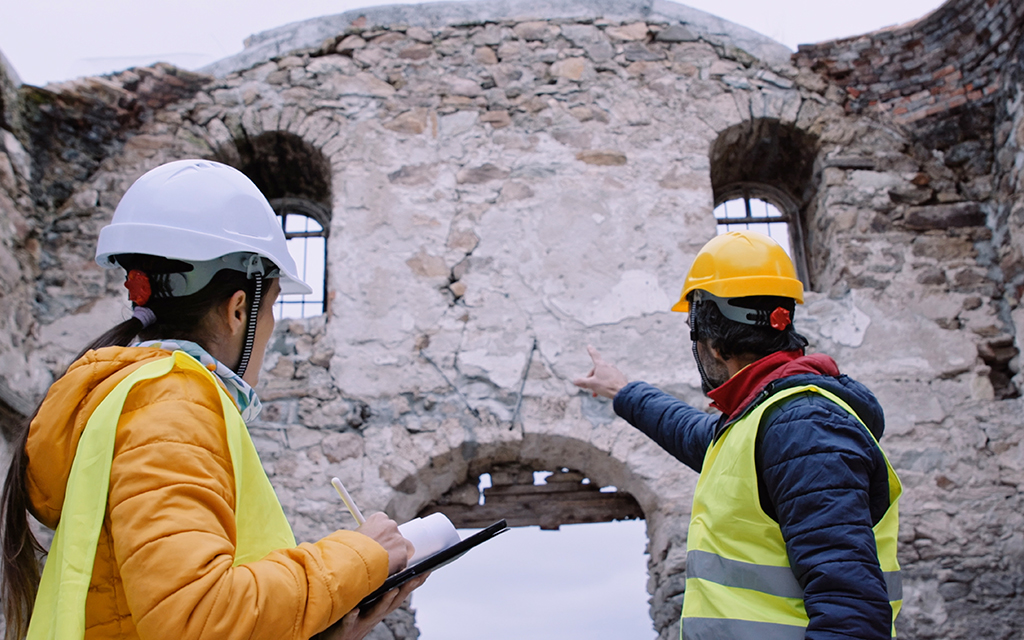
Within this context, the ARGUS project is pioneering a new approach to preventive preservation by combining existing datasets, smart monitoring systems, digital twins, and risk modelling into a unified framework for heritage management.
The new ARGUS Pilot Existing Data Report highlights how historical and contemporary data sources have been leveraged to support conservation planning and risk assessment across the project's five pilot sites. The report provides valuable insights into both the opportunities and challenges of building data-driven solutions for cultural heritage protection.
At the heart of the ARGUS approach lies the recognition that effective risk assessment depends on high-quality and well-structured data. To establish this foundation, project partners undertook a comprehensive process of identifying, evaluating, and integrating information from a wide range of sources, including geological surveys, environmental monitoring agencies, scientific publications, satellite imagery repositories, and web-based data platforms. This effort drew upon the expertise of each pilot site from Schenkenberg Castle in Switzerland, Baltanás in Spain, Delos Island in Greece and Monti Lucretili and Sant'Antonio di Ranverso in Italy.
One of the key lessons emerging from the project was the complexity of working with legacy datasets. Information was often stored in different formats, collected according to varying methodologies, or accompanied by incomplete metadata. In many cases, essential details regarding spatial coverage, temporal resolution, or data collection methods were unavailable. As a result, the project adopted a flexible and iterative approach to data management, continuously refining its Data Management Plan as new information became available and access conditions evolved.
To better understand the practical realities of implementing monitoring systems in diverse heritage environments, ARGUS conducted two surveys among pilot-site partners. The first focused on data collection processes, standardisation procedures, and the development of digital twins. The second explored operational experiences related to sensor deployment, connectivity, maintenance requirements, and stakeholder engagement.
These surveys revealed both successes and challenges. While several pilot sites reported efficient access to data and smooth sensor installation processes, others encountered technical, procedural, or administrative barriers. Schenkenberg Castle, for example, faced challenges related to data accessibility, while Baltanás experienced connectivity issues within its underground wine cellars. Despite these obstacles, all pilot sites made substantial progress in implementing monitoring systems, developing digital twins, and generating valuable environmental and structural datasets.
The surveys also highlighted the importance of collaboration with local authorities, site managers, and communities. Successful deployment of monitoring technologies often depended on local support, particularly when addressing installation constraints, maintenance requirements, or public concerns regarding new technologies. Very productive engagement and collaboration with local authorities at the Monti Lucretili pilot site reinforced the importance of stakeholder engagement as a critical component of sustainable heritage management.
The report further explores the operational realities of installing and maintaining sensors within sensitive heritage environments. Each site presented unique challenges, from difficult terrain and environmental exposure to architectural constraints and limited accessibility. Maintenance emerged as a recurring consideration, with weather conditions, vandalism, and equipment failures occasionally affecting system performance. Nevertheless, most pilot sites reported strong sensor reliability and effective data transmission, demonstrating the viability of smart monitoring systems even in complex heritage settings.
Beyond site-level monitoring, ARGUS has developed innovative approaches for analysing risks at the landscape scale. By combining open-access satellite imagery with geospatial datasets, project partners created models capable of assessing soil erosion, seismic hazards, and flood susceptibility. These models provide valuable insights into environmental threats operating at both regional and local levels, enabling heritage managers to make more informed conservation decisions.
The Monti Lucretili pilot site offers a particularly compelling example of this approach. Here, multiple environmental and geospatial datasets were integrated to assess risks affecting dispersed heritage features such as historic dry-stone walls. Through advanced GIS modelling and spatial analysis, the project demonstrated how environmental pressures can be visualised and evaluated across entire landscapes rather than at isolated monuments alone.
Complementing these large-scale analyses, the Delos Island pilot site showcased the value of detailed, non-invasive diagnostic investigations. High-resolution Ground Penetrating Radar (GPR) surveys were conducted on archaeological mosaic floors, revealing subsurface anomalies and structural discontinuities that would otherwise remain undetected. By combining these localised investigations with broader environmental risk models, ARGUS demonstrates the benefits of a truly multi-scale approach to heritage monitoring and preservation.
Taken together, the findings of the Pilot Existing Data Report illustrate the importance of integrating data standardisation, operational learning, environmental modelling, sensor-based monitoring, and diagnostic investigations within a single methodological framework. The experiences gathered across the five pilot sites not only validate the ARGUS approach but also provide valuable guidance for future heritage monitoring initiatives.
As cultural heritage sites face increasing pressures from climate change, environmental hazards, and human activity, the need for scalable and evidence-based preservation strategies has never been greater. By harnessing existing data, embracing innovative technologies, and fostering collaboration across disciplines and communities, ARGUS is helping to lay the foundations for a new generation of preventive conservation practices capable of safeguarding Europe's cultural heritage for decades to come.